Podcast: Why the Latest Stroke Treatment Depends on You
Even with major advances in stroke treatment and research, good outcomes depend on getting fast help for a stroke victim. Neuroscience specialists Dr. Bryan Ludwig and Dr. John Terry share the life-changing progress in stroke treatment and how you can diagnose a stroke with more than 90 percent accuracy. Bonus - how celery may boost stroke treatment outcomes. It's all on this Premier Health Now On-Air podcast.
Listen to Why the Latest Stroke Treatment Depends on You - Premier Health Now On Air, Episode 17 or read the transcript.
Why the Latest Stroke Treatment Depends on You - Premier Health Now On Air, Episode 17 - June 18, 2016
Leslie Laine: Welcome to Premier Health Now On Air. Today, we're talking about stroke. It can be a killer but doctors are making amazing progress with technology and treatment options. And we have two stroke specialists with us today to fill us in. We're glad you're along. I'm your moderator, Leslie Laine, and with me today from the Premier Health Clinical Neuroscience Institute are Dr. Brian Ludwig ... thank you for joining us.
Dr. Ludwig: Thank you. Hello.
Leslie Laine: And Dr. John Terry. Welcome.
Dr. Terry: Thank you.
Leslie Laine: In general, we can talk about strokes being of two types. So, that we're on the same page, let's define what a stroke is and those two types.
Dr. Ludwig: The two types of strokes are bleeding-type stroke and low blood flow type stroke. They have medical names, but I think it's easier just to remember that all strokes are related to an artery not being able to supply blood to the brain. And the brain, being a very important organ, and one that doesn't tolerate lack of blood supply very well, it ends up being damaged by either type stroke, a bleeding stroke or a low blood flow stroke.
Leslie Laine: And when you say damaged, do you wanna talk a little bit about what that means?
Dr. Ludwig: The way I use the word damaged means cellular injury or cellular death, meaning the brain cells are unable to function or permanently no longer function, which results in patients having symptoms that we recognize as stroke.
Leslie Laine: Before you can ever begin treatment, you need to diagnose if you're dealing with a stroke, and what kind it is. What are the significant advances in how you diagnose strokes, and what's the impact of those advances?
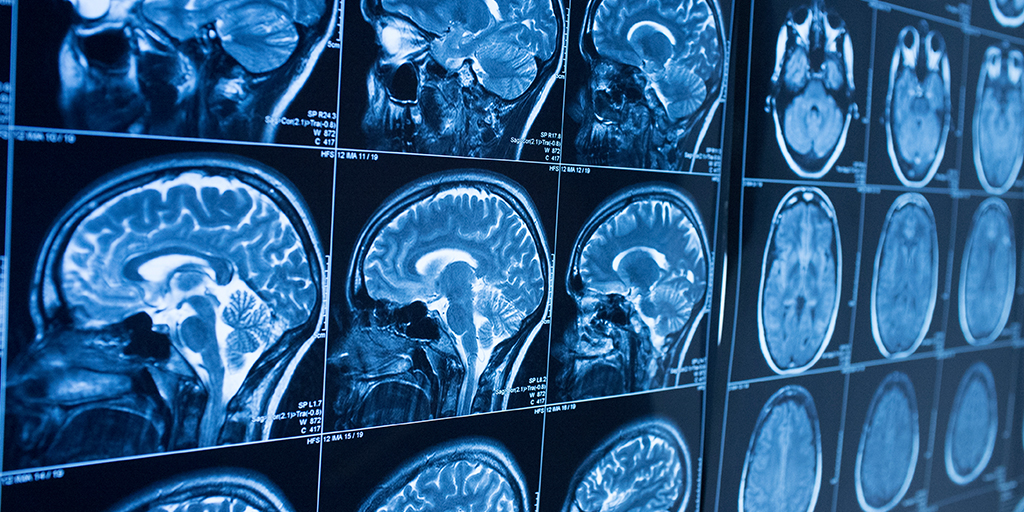
Dr. Terry: Well, I think one of the cardinal features of stroke is the sudden onset of symptoms. Almost all strokes come on suddenly. And the diagnosis still rests a lot on the clinical examination and the doctors looking at the patients and recognizing patterns. But there's been a tremendous amount of progress in medical imaging. And we rely heavily on things like CAT scans and MRIs and other types of modalities or techniques to image the patients so we can see what's going on inside of them.
Leslie Laine: How does the information you get from this new imaging technology effect the decisions that you make about the treatment? What are you seeing?
Dr. Terry: Well, when you talk about treatment of stroke, there are several phases of stroke, and each phase has different options for treatment. The initial phase, or the acute phase, when the symptoms begin, is really centered around trying to open a blocked blood vessel in the case of the type of stroke that happens from a blockage or clot in a vessel. Or, trying to prevent further bleeding in the type of stroke that arises from bleeding.
Dr. Terry: The imaging really helps us figure out, number one, is it a bleeding stroke or a stroke from a blocked vessel? And then number two, we get information about what blood vessels are involved; how much damage has already occurred; and things like that, that allow us to decide what the best way to move forward with a particular patient is.
Leslie Laine: How is this new technology different from the older technology? And is this a very recent development?
Dr. Ludwig: Imaging technology has come a long way, even in the last decade, certainly in the last 30 years. There have been many, many improvements on both CT and on MRI, so now we have available to us imaging that identifies tissue injury from lack of blood supply from bleeding in much greater detail, and with much greater speed, with much greater availability of these images. So, it wasn't too long ago that we'd have to wait or we'd have to send the patient all over the place for maybe very specific imaging. Now, many centers have all these available to them.
Leslie Laine: Are there other diagnostic advances?
Dr. Terry: Well, I think in addition to refinements to the current imaging techniques, the ability to view the images remotely has been very helpful. So, in the past, when images were displayed on films, physicians had to go to where the films were and look at them. Now that we have electronic means of distribution, a physician can really look at images from anywhere in the world, and they can look at them on their phone; they can look at them from desktop computers. So, the ability to get the image and then have the physician see it immediately has been a big improvement as well.
Dr. Ludwig: Yeah, that technology and that access that physicians now have is clearly resulting in better outcomes for patient care because, as you might imagine, stroke is a disease that occurs 24 hours a day, seven days a week, 365 days a year. And physicians and teams have to be ready to respond at all times. This kind of technology and access now allows us to make these critical decisions when seconds really do count in the time that it takes to turn on an electronic device or your phone.
Leslie Laine: When you describe this access, I'm thinking there's an imaging device at the hospital and you may not be there, but you can see it remotely. Is that different from what I have heard of as TeleStroke capability?
Dr. Terry: Yes and no. It certainly is included in TeleStroke efforts, the ability to remotely view images. But, the primary benefit of TeleStroke is that because we have a limited number of stroke experts, not every hospital has one that can come in and see patients in their particular hospital all the time. With the advent of the ability to have audio and visual streaming between machines, what TeleStroke most of the time means is that there's a core stroke neurologist who is responsible for covering multiple hospitals. If a patient comes into a hospital that that neurologist doesn't physically happen to be at, that person can log onto his computer and see the patient over the computer, talk to the patient over the computer, examine the patient, and then look at the images remotely. And that really is all the information that you need to make decisions early on.
Dr. Terry: So, it's really a way of expanding our capabilities, being able to cover large territories without the travel time.
Leslie Laine: For the patient? The patient then can get to the nearest facility.
Dr. Terry: That's correct because time is extremely important. It's been estimated that every 15 minute delay in therapy upfront results in about a 4% decrease in the chances of good outcome. So, it is extremely critical that we try to make things move as smoothly as possible and avoid all unnecessary delays.
Dr. Ludwig: I think that part of our challenge when we first launched TeleStroke for Premier was that the system wasn't always comfortable trying to make all these medical decisions for a particular patient group, meaning stroke patients. Where the amount of research and literature and things that were changing and evolving about stroke were happening so quickly that providers that didn't do it all day, every day, were having difficulty keeping up with all of this advancement and changes in the way we treat these patients.
Dr. Ludwig: So, having one centralized core team with the partnership of all the emergency rooms and all the providers who take care of these patients at the various centers that we've partnered with, made a lot of sense. And it's clearly improved the outcomes of our patients.
Leslie Laine: And I do want to get to outcomes, but I wanted also to talk first about treatment, because when we think about stroke treatment, the clot busting drugs have been a standard. But the drug TPA had to be administered very quickly after a stroke. And now, there are new guidelines that have just come out, I believe just this year, for treating strokes with drugs. Can you explain what's new?
Dr. Terry: Yeah, I think before I get into that, one of the things that I did want to point out is that we've spent a lot of effort trying to avoid unnecessary delays so that we can treat people as rapidly as possible. One of the components that we have to deal with there are delays on the patient side. And so, it's very important if the person is identified as possibly having a stroke or they think they're having a stroke, that they get to the nearest emergency room as soon as possible because many people will lay down and try to take a nap or wait for it to go away, and that is a delay that we have no control over and can adversely impact outcomes in the long run.
Dr. Terry: I think when you talk about treatment and what we really are talking about are efforts to unblock a blocked vessel or efforts to prevent further bleeding, those are things that happen very rapidly, or should happen very rapidly, after the onset of symptoms. I think the most progress has been made probably in the type of stroke that's caused by an arterial clot, or a clot in our blood vessel supplying blood to the brain. As you pointed out, intravenous or TPA, the drug TPA that's given by vein was initially only given within three hours after the onset of symptoms. Since then, through research we've discovered that it can be given up to four and a half hours in some people after the onset of symptom.
Dr. Terry: The other thing that's been a huge help has been the development of what we call endovascular treatment, which is essentially using devices to go into the brain arteries and physically remove the clot. In those type of procedures, it's recently been shown that people can benefit for up to 24 hours after the onset of symptoms. Now, that doesn't mean that you have extra time to come to the hospital. It just means that we can treat people farther out. So, just like with any treatment for stroke, the faster it's provided, the better. But our window of opportunity to treat people that come in with stroke patients has increased considerably.
Dr. Ludwig: I think that ties nicely back to your questions and our discussion around imaging because oftentimes patients and families and the public will hear 24 hours, and I think Dr. Terry's point is an excellent one. You don't have time to wait about these. You need to get seen immediately if you have symptoms. And the other expectation that we wanted to try to work with the patients and the public about is that not everybody will qualify for these acute interventions, meaning surgical or even medical interventions for stroke. And it's largely based off all of this imaging technology that we use, but it's important that people realize that screening the appropriate patients yields the best outcomes. And unfortunately, not everybody falls into that category of being an appropriate patient for these types of surgeries and interventions, and it's important that you are seen quickly, are seen by a center like ours, which is a comprehensive stroke center being awarded by the Joint Commission, the highest level of stroke care. That's really where you're gonna have your best chance and your best possibilities to be offered and provided these therapies in the fastest time possible, again, if you qualify.
Leslie Laine: And I want to ask, just to be clear, you don't need to come to the comprehensive center if the system has the TeleStroke capability? Do you want to speak to that?
Dr. Ludwig: That's exactly right. When we launched this stroke program, the Comprehensive Stroke Center here at Miami Valley Hospital, the idea was that we would strengthen stroke care across Premier, so all boats rise kind of philosophy. And the way we did that was using TeleStroke, basically using imaging across the system that is all consistent and pathway and protocol driven so that no matter where you land within Premier Health, or even outside if we're covering those particular hospitals, that you will receive the same type of evaluation that you would if you had landed right here in Miami Valley Hospital in the Comprehensive Center. That's what a Comprehensive Center does is it strengthens all of the programs around it, and all of ours have been awarded the gold medal award for stroke care by the American Stroke Association. We've won multiple awards for the type of care we provide. We're very proud of that. And it does give the public the option to go to the nearest emergency room and know that you're going to receive the best stroke care, no mater where you land.
Leslie Laine: What have these advances meant for real people? My dad had a stroke, a very young friend had a stroke ... how are the outcomes changing now that you've seen these advances?
Dr. Terry: Well, I've been treating stroke patients for a long time, and I can tell you the main artery that supplies one of the hemispheres of the brain is called the middle cerebral artery, and that is the most common artery involved in stroke. When a person comes in with that artery blocked, they usually have very severe stroke symptoms. And, years ago, what you would see is someone would come in, we would figure out that that major artery was blocked. They would have severe symptoms. They would then have severe brain swelling, which may take their life. If they survived that phase, they usually ended up needing a tracheostomy, which is an implanted tube in the neck to help them breathe, and then a feeding tube implanted in their stomach to feed them. And that was pretty much the outcome that you saw with that particular type of stroke. That was well before we had any of these interventions.
Dr. Terry: And now, when I see someone coming in with a middle cerebral artery occlusion, it looks terrible, gets the clot out, and the next day gets up out of bed and walks around and goes home several days later. It's just amazing. So, there has been I think a huge impact on the outcome. As Dr. Ludwig said, unfortunately, if you look at comprehensive stroke centers across the country, the rates of people that are able or meet the criteria for getting interventions are usually about somewhere around 30% of the people coming in with strokes. So, it's still a minority of people unfortunately. But for those people that qualify, I think there's been a big impact. And if you look at the causes of death in the U.S. overall, stroke used to be third; it's now fifth. So, we like to believe that some of the reason that that has happened is from our efforts.
Leslie Laine: When you said 30% of the people may qualify for intervention, is that related to maybe waiting too long to get to you?
Dr. Terry: Yes, one of the biggest reasons that people don't qualify is that they arrive late.
Dr. Ludwig: Yes, and that can't be emphasized heavily enough that time is brain. You have to be evaluated quickly if you're starting to have the symptoms and to recognize the symptoms as critical. It's not hard to do. You have to remember the word FAST, which is an easy word to remember and an easy word to spell. It's four simple letters, F-A-S-T. And F is supposed to remind you that you look for a facial droop; A is supposed to remind you that you ask the patient to raise their arms; S, is again, reminding you to ask them speak for you, usually not ask them their name but just have them repeat a sentence if they can; and then T is think about the type of action or it's time to respond, there's a lot of different T's. But the important detail here is if that is someone is identified with a facial droop, an arm that doesn't raise like the other one does, or a speech pattern that is not normal for them or they are unable to produce speech, that you have a 92% chance if all three of those are positive on your very quick screening of this person, 92% chance that you've diagnosed stroke correctly.
Dr. Ludwig: Now, it doesn't identify if it's bleeding stroke or a low blood flow stroke, but it's most likely going to be a stroke of some sort. If you have only one of the three of those, you have a 72% chance in being correct in diagnosing stroke, so it's still a good scale even if just one is a positive on your quick screen. It takes 45 seconds to do this with a patient. It's great for the public in terms of their ability to help their loved ones or help somebody else that may be having symptoms. And then of course, that last letter, T, take action, think about getting 911 involved. Time is important, all those Ts are really all saying the same thing, which is get the person to the emergency room.
Dr. Ludwig: We have shown that that scale works very nicely and that, again, it's important to emphasize it doesn't identify which type of stroke you might be having. So, the public oftentimes will mix the messaging for treatment with heart attack and stroke, and often folks will say, "Well, don't worry, I gave the patient an aspirin", because that's appropriate in a heart attack. But on a stroke, you may not know which stroke you're dealing with, and if it's a bleeding type stroke, that would be inappropriate because aspirin's a blood thinner.
Dr. Terry: I think that, just to kind of repeat this idea, we know from studies that have looked back at patients that came in within three hours of their symptoms and got intravenous TPA, the ones that showed up in the first hour and a half had better outcomes than the ones that showed up in the second hour and a half. So, even though all those people came in within three hours, the ones that got in there quicker clearly did better. So, when we're talking about opening up the windows, or bigger windows for opportunities for intervention, rather than allowing people more time to get in, what it really means is that we now have, for the person that comes in, six hours after their stroke. We now have something we can potentially offer, where in the past, we didn't have that when it was a three hour window.
Dr. Terry: So, and even for the six hour window or the 24 hour window, the people that get in earlier do better. It really is very dependent on time because that time that you're waiting is time the brain is not getting enough blood flow, and brain gets injured during that time.
Dr. Ludwig: There's actually quite a bit of buzz or talk right now about the golden hour of stroke. It was actually borrowed from cardiac, or heart attack literature as well, where that first 60 minutes after the patient started to have symptoms is critical and has, in almost every study, shown the best outcomes if the patient can receive treatment in that first 60 or even first 90 minutes. So, it's really important for the public to hear that.
Leslie Laine: Brain scientists are constantly researching how to improve treatments and outcomes. Can you talk about anything that you're working on, or what excites you about research that you're watching?
Dr. Terry: Well, I think we've focused mostly on the initial treatment for stroke, but we also have more options. It used to be aspirin was the only option for stroke prevention. We now have other medications that can be used. We've shown that the use of ACE inhibitors or angiotensin receptor blocking agents, which are types of blood pressure medicines, reduce stroke risk more than you would expect for the blood pressure reduction, and it's felt that they probably do something in addition to lowering blood pressure that reduces stroke risk.
Dr. Terry: We also have statins now, which are cholesterol lowering drugs, which also are felt to do something in addition to lowering cholesterol that help reduce stroke risk. So, the studies that have shown those have helped I think have really had a good impact in terms of preventing stroke recurrence because once a person's had a stroke, they're at risk for more. We are currently involved in a clinical trial that is looking at a chemical that was actually found in celery, which is felt to possibly enhance people's outcome from stroke.
Dr. Terry: So, there's still a lot of things that are going on. We also have been involved in the past in a trial that used a novel way to get blood out of the brain when someone's had a bleeding stroke that was much less traumatic than an open surgery, and seems to help those people too. So, there's really a lot of things going on. And part of the role of a comprehensive stroke center is to involve itself in ongoing clinical trials and research so that we can help add to the existing knowledge and improve current treatments.
Dr. Ludwig: Related to the bleeding type strokes, we have partnered with mechanical engineers at Wright State University to look at factors that potentially could lead to aneurysmal rupture, which are a big source of bleeds that we see inside of the head. It's a question that is unanswered as of yet about how to predict which aneurysm will rupture and which won't. And using the technology in collaboration with the engineering team at Wright State, we were able to use computer models and simulations and even 3-D printing to look at brain arteries and try to figure out how do we better assess patients with brain aneurysms? How do we better treat them? And, counsel them on who might need surgery and who might not? And that's been ongoing. We have publications and grant funding around that for several years now.
Leslie Laine: And an aneurysm is a weakening in the wall that causes it to balloon out, right?
Dr. Ludwig: That's correct. That's the typical type of aneurysm we talk about actually. Aneurysms come in a couple different flavors, if you will. But the most common one is what's called a berry aneurysm or a saccular aneurysm, which is exactly that, a weak spot in the artery that will balloon out and eventually unfortunately be put under enough stress that it could rupture, or would rupture. And that leads to the bleeding type stroke that we also treat here at Premier, and have a whole team, in interventional team that Dr. Terry and I are both on, that is dedicated to taking care of that patient population and it has been for the last several years.
Leslie Laine: Since, Dr. Terry, you brought up prevention, let me ask who is at risk and what on earth can we do to prevent having to see you? Sorry, what can we do?
Dr. Terry: That's okay, I'd rather not see you too. I think that, when we talk about risk factors, there are what we call modifiable risk factors, and those that are not modifiable. For instance, age is a risk factor for stroke. As you get older, your risk goes up. Unfortunately, there's not yet much we can do about that. But in terms of the modifiable risk factors, the two most important ones are high blood pressure and smoking.
Dr. Terry: High blood pressure's difficult because it doesn't really cause pain or any symptoms until some catastrophic failure, heart attack, stroke, kidney failure, things like that. So, that's not a lot of incentive for people to get it treated because it doesn't hurt. But we know that, even in a person that has what would be considered normal blood pressure, if you lower that blood pressure a little bit, it gives protection against stroke and heart attack. So, I think really catching people early in the course, when they're developing high blood pressure, and getting it treated effectively is extremely important.
Dr. Terry: The other thing is cigarette smoking. It is widespread. It's very difficult for people to quit, but it's probably one of the worst things you can do for your brain artery health. And, we deal with its effects all the time.
Dr. Ludwig: Yeah, I would certainly agree that cholesterol, blood pressure control, stopping smoking, controlling your diabetes, exercise, eating healthy, and making sure that you follow up with your primary care physician tightly is all beneficial for patients who are at risk for stroke.
Leslie Laine: It is obvious that you both are very passionate about what you do. And as we close our discussion, I'd like to ask each of you, what is it about this field that really fuels that passion for you? And what would you hope to see happen in stroke science in your lifetime?
Dr. Terry: Well, you know, I think more than any other organ, the brain really is involved in who we are as people. You can get your heart transplanted, your kidney transplanted, and you're the same person. Even though we can't transplant brains, presumably if you had a brain transplant, you would be a different person. And I've always had a very deep interest in human behavior so that is what got me kind of headed in the direction of this field. I also like the excitement of things happening suddenly and having to respond in emergency situations. So, it's been a good mix of characteristics for me, and I feel very lucky that I had this niche to work in.
Dr. Terry: In terms of what I would like to see happen in my lifetime, I think continued improvement on the ability to reopen blocked blood vessels or plug up bleeding blood vessels, and techniques that can expand the amount of time that we have to work in. So, potentially, emergency medicines that could be given in the field that would have the effect of prolonging the time over which we could intervene. And then finally, I think the ability to enhance either plasticity or the ability of other uninjured parts of the brain to take over function of areas of the brain that have been injured, or the ability to grow new brain tissue in areas of injury, which has been kind of a holy grail. But I think as time is going on, we're learning more and more about how we may be able to move in that direction. I think if we could do something like that it could really ease the burden of disability from neurologic diseases.
Dr. Ludwig: My journey into this field of stroke and neurointerventional really stemmed from family experiences, like many people have in their own families. Our family was touched multiple times with a brain aneurysm story that at the time, I felt fairly helpless and couldn't do much about. And they can unfortunately be devastating problems. Now, thankfully with the therapies and the treatments we have with minimally invasive surgery to repair some of these problems, they are not as scary as they used to be. And being part of that is very satisfying. I would echo what Dr. Terry has already said. I love what I do. I consider myself very fortunate to be provided this opportunity to interact with people and hope to change their lives for the better. I think that whether it is a bleeding stroke or a low blood flow stroke, these therapies are really changing for the positive people's outcomes, and that is exciting. And it's very satisfying.
Dr. Ludwig: I hope we can continue to expand that in the future so that more people can be qualified to receive these types of treatments. Again, maybe using technology and hopefully computers to identify people before they have their symptoms, and maybe intervene preemptively instead of reacting after the symptoms have started. And I would also echo that it would be sort of a holy grail to have a neuroprotective agent, something that we could use medically if the person were to develop symptoms, that you could administer not just to maybe open an artery or try to, again, mechanically open an artery, but also protect the cells that we're desperately trying to protect by giving blood supply back.
Dr. Ludwig: Many, many trials have been out there trying to find a protective agent that would help the cells weather the storm of low blood supply or a stroke, and so far, none of them have unfortunately panned out to be helpful to patients. But, that would be something, as Dr. Terry mentioned, something that you could administer right at the onset and know that the brain is at least somewhat protected as you go through these channels to try to open up blood arteries, or more blood supply to the brain.
Leslie Laine: Well, before we part, we do want to remind everyone about the stroke warning signs because if you've said it once, gentlemen, you've said it at least five times I think. Time is brain in stroke treatment. So, we want you to remember FAST, face, arms, speech, and time.
Leslie Laine: We thank our guests today from the Premier Health Clinical Neuroscience Institute for an enlightening and really heartening look at inspiring advances in stroke care. Our thanks to Dr. Brian Ludwig and Dr. John Terry.
Leslie Laine: If you want to know more, visit premierhealth.com/healthnow. We'll be back. We hope you will. I'm Leslie Laine, and thanks for joining us. Watch for our next edition of Premier Health Now On Air.
Source: Bryan Ludwig, MD, Clinical Neuroscience Institute; John Terry, MD, Clinical Neuroscience Institute