Podcast: First Things to Know to Give First Aid
Knowing what to do and what NOT to do in an emergency can mean the difference between helping or making an injury worse. Brush up on the basics, challenge what you think you know, and learn what family health information should be in your First Aid kit. Join Family Nurse Practitioner Jeff Penny on this Premier Health Now On-Air podcast so you can step in confidently when the unexpected happens.
Listen to First Things to Know to Give First Aid - Premier Health Now On Air, Episode 20 or read the transcript.
First Things to Know to Give First Aid - Premier Health Now On Air, Episode 20 - May 16, 2019
Leslie Laine: Welcome to Premier Health Now on air. Today we're talking first aid because there is no more helpless feeling than not knowing what to do when someone you care about is hurt. What should you know? What do you think you know that's not true? And how can you brush up on your first aid skills? I'm your moderator Leslie Laine and with me today is Jeff Penny, Family Nurse Practitioner with Premier Health Urgent Care. Welcome Jeff.
Jeff Penny: Hello, thanks for having me.
Leslie Laine: We think of first aid as that do it yourself response to a minor problem. The issue is for untrained first aid responders how can we tell when we have a real emergency on our hands instead of something we can handle with first aid?
Jeff Penny: Sometimes it's tough to always know what the right answer there is or what you can deal with at home. If you do have a question or you don't feel like you know what to do in that instance reaching out to a healthcare provider is always a good idea. There are some basic things that you can take care of on yourself that don't always need a medical evaluation or can be dealt with some of the over the counter medicines and some knowledge of first aid.
Leslie Laine: So, we'll get into some of the specific issues but I wonder if there are situations that we should always treat as a real emergency.
Jeff Penny: Certainly there are some things that are always an emergency. You don't want to really deal with chest pain, or if you're feeling short of breath, or you can't swallow, or you feel like you're having symptoms of allergic reaction. Certainly if you had any kind of major trauma where there was loss of consciousness. Any type of stroke symptoms, weakness, difficulty with your speech, or a severe sudden onset headache, bad abdominal pain, things like that just really shouldn't be messed around with and it's just better to seek treatment.
Leslie Laine: So, in a real emergency we first call 911 but then how can this again untrained responder assess what kind of aid to give and steer clear of doing more harm than good? Are there some triage basics we should know?
Jeff Penny: Definitely you want to get the help on the way as soon as you can. Like you say calling 911 first and then yeah seeing in any way you can maybe assist the injured person. Sometimes it is better to keep your hands off if there's a case of trauma you're not sure if there's been a spinal cord injury. If you're not trained in keeping them immobilized sometimes it is better to let them sit where they are until somebody is trained in that. You can potentially worsen an injury if they have any broken bones in the spine. It could become problematic. And then, certainly trying to get any history, health history with the person that you can, being there for them and trying to provide them comfort is always helpful. And then, being able to be that voice for the patient when the first responders arrive and let them know what you've witnessed, what you've seen, and things maybe the patient is unable to tell them themselves.
Leslie Laine: I would think that most homes have scattered around the house nearly all of the elements you would want in a first aid kit. Can we talk about how and why we should assemble them into a kit and what are some of the must haves?
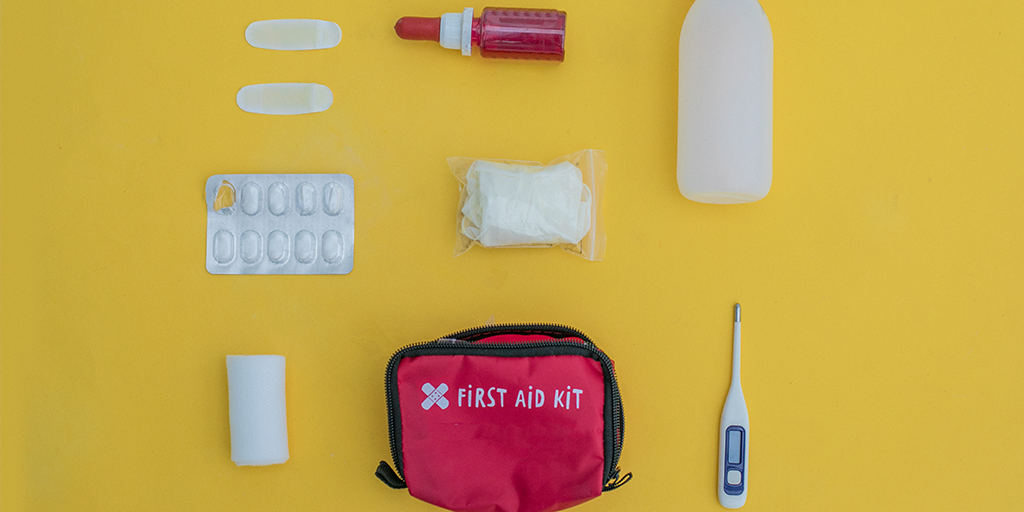
Jeff Penny: A first aid kit is good to have. Keep something in a central or known location where it's kind of all together either in your house or maybe even something in your car. Often times these types of injuries or things come up when you least expect it or are not really prepared for it. So, better to have that stuff ready so you're not hunting around when you do need it. Any types of injuries that might involve bleeding, cuts or something like that you're going to want some sterile dressing, sterile gauze, maybe a variety of band aids and things to put on there that you can apply quickly if you do cut yourself or someone else gets injured.
Leslie Laine: So, what would we keep in a first aid kit?
Jeff Penny: Definitely the bandages like I mentioned. It's good to have some antibiotic ointment, some common medications that are helpful, ibuprofen, Tylenol, Benadryl can be helpful in the case of an allergic type reaction. The Tylenol and Motrin are good for a lot of different aches and pains. You could also keep some topical hydrocortisone cream or calamine lotion, Benadryl cream, those things are helpful for a lot of the common rashes or poison ivy type things you might come in contact with. If you want to step it up a level you could also look into, if you feel comfortable or are interested in getting a tourniquet they sell those pretty commonly. But those are for more serious injuries or heavier bleeding but they can be life saving, help stop bleeding, and really time is of the essence in those types of situations. So, you can really save someone's life if you feel comfortable and want to purchase something like that.
Leslie Laine: Do we need to worry about those kinds of medications expiring? If I stocked the kit and I don't use it for a few years and I look at it and say, "Oh it says it expired in 2018"?
Jeff Penny: It is best to go by the expiration date listed on the bottle. For the most part taking a medication that's slightly expired is not usually harmful. Sometimes it loses some of its effectiveness so it is best to stick with the manufacturer recommendations.
Leslie Laine: So, we should probably go back in and check every so often to rotate expiring things?
Jeff Penny: Sure definitely a good idea to make sure you're checking on the expiration dates and rotating those out. You can try and keep it at the same time of year when you change your smoke detector, or batteries, or something like that.
Leslie Laine: The Mayo Clinic lists some recommended items for a first aid kit and I was surprised to see that it included super glue, duct tape, and a turkey baster. So, what might you do with those things Jeff?
Jeff Penny: Yeah, that's interesting. Super glue can come in handy for small cuts. We use something similar in the urgent care. If you come in with a minor cut a lot of times we can use essentially super glue to hold it together. Sometimes we can use that in the place of sutures so it usually works pretty well for minor cuts. Duct tape, I'm not entirely sure what you'd maybe use that for. I guess if you had a bad injury where you need to really, trying to apply a lot of pressure you could use duct tape. It's pretty sturdy in that sense. But the turkey baster, I'm wondering if they would use that as a nasal aspirator. You could maybe suck a lot of secretions out if you have a lot of nasal drainage or congestion. Sometimes it may help with that similar to a pediatric nasal suction.
Leslie Laine: I wonder if it would be useful in flushing a wound if you've got a particularly dirty cut?
Jeff Penny: That could potentially be a use for it as well.
Leslie Laine: We think about stocking supplies in a first aid kit but not information. What kinds of forms or contact numbers should also be in there?
Jeff Penny: Yeah that would be a good thing to also keep in your first aid kit. Keep that medical information handy whether you have any medication allergies, a list of your medications, if that's printed and legible that's a great help for first responders and medical personnel. Additionally if you do have a lot of history or you're getting up there in age you could think about including a living will or a DNR. You have those papers in a centralized location so if that emergency does happen you have those papers ready to go and you're not rushing around causing added frustration in that moment.
Leslie Laine: So, we're thinking of the first aid kit not only as the minor issue solution but a place to keep some information if it turns into a 911 call?
Jeff Penny: Definitely I think that's a great idea to keep that all in a centralized spot.
Leslie Laine: So, it's good to have this well stocked kit. Now, what should we know about actually using it for common injuries? Let's just say minor cut, scrapes, what's the first thing to do?
Jeff Penny: For most minor cuts and scrapes the big thing in getting it clean and then keeping it clean to avoid infection. Your body's pretty amazing, it'll heal itself. Most of the minor cuts and scrapes do heal with a little time. They often will mention hydrogen peroxide to cleanse wounds. It's been used I think since the 1920's as a antiseptic and it does have those antimicrobial properties but they found that it also my damage some healthy tissue as well and they've kind of moved away from that as being a first choice for wound cleansing. Standard soap and water works really well. That would be my go to for most cuts and scrapes. And then, putting some antibiotic ointment on there and covering it and keeping it clean and allowing your body to heal.
Leslie Laine: What if the bleeding is bad?
Jeff Penny: If you have bad bleeding or you can't get it to stop initially the first things are applying direct pressure and you can, if it's on an extremity you can hold it up above the level of your heart to try and minimize that bleeding. If it's heavy or what you consider severe bleeding, if you can apply some type of tourniquet above the level of the wound again if it's on an extremity and then seek immediate first aid or call 911 would be a good recommendation.
Leslie Laine: Is a bloody nose that won't stop a special case?
Jeff Penny: That's kind of tough. Most people, bloody noses are pretty minor and they can be dealt with at home. Some people who have really severe bloody noses or elderly can get into trouble, such large amounts of bleeding that it can make it hard for them to breathe and can be a real life threatening emergency especially if they're on any type of blood thinners like Coumadin, Effient, Plavix, some of those things.
Jeff Penny: If you have somebody with a severe nose bleed especially an elderly individual you want to apply pressure to the nose and generally have them tilt their chin down to help them. A lot of times if you tilt your chin back a lot of that blood goes into the stomach, and can make you sick, and cause some other issues. So yeah, applying direct pressure and really holding that pressure. You can use a tissue or something like that to try and pack the nose to help ease the bleeding.
Leslie Laine: And again, if you get worried contact help.
Jeff Penny: Right. If you're having trouble getting it to stop, or the patient has any trouble breathing, or you're just really concerned about the volume of blood loss then definitely call 911.
Leslie Laine: How about sprains and strains?
Jeff Penny: Fairly common injuries, sprains and strains, some muscle pain or joint aches that come up. A lot of times you can attempt home care with some anti inflammatories, NSAIDs, Tylenol. They talk about RICE as Rest, Ice, Compression, Elevation to help with those types of injuries. If you feel like you did have a bad trauma to a joint, your ankle, or something like that and you're having a lot of pain, can't walk on it, then maybe it is better to come in and get some imaging, x-ray to rule out any facture.
Leslie Laine: Are there any tell tale signs that I'm dealing with a broken bone?
Jeff Penny: Sometimes it can be tough. Some people have fairly mild symptoms and are able to walk on a broken ankle for a few days and they don't complain of a lot of pain. So, sometimes it is hard to say for sure whether it could be a sprain or a fracture but if it's persistent, or in severe pain, or like I said they are concerned about a significant mechanism of injury, a lot of force behind it, more likely to cause broken bone.
Leslie Laine: How about burns?
Jeff Penny: Burns are another common injury that people encounter. Minor burns can be dealt with at home. First degree bones where have some redness around the area that was burned. The initial treatment is to remove that heat source so if they come in contact with something hot obviously removing that from you and then you can run the burn under some cool water. You don't want to freeze it. You don't want to put ice on it. That can cause further tissue damage but cool water can help ease the burn. And then, another thing we worry about with burns is them getting infected if you have some blistering. Your skin is the first line of defense so anytime that's taken away you're prone to an infection. So, you have to monitor it well. Antibiotic ointment can work as a first aid use and again NSAIDs, Tylenol are helpful for the pain. Burns can be pretty painful. If it covers a large portion of your body or it goes around an entire extremity, what we call circumferential you can run into trouble with too much swelling that can impede your blood flow and things and you definitely want to seek treatment.
Leslie Laine: How about allergic reaction? It can start small but then get bad fast?
Jeff Penny: Certainly yeah allergic reactions, there's all different severities from a mild itchy rash to a full flow anaphylaxis life threatening emergency. If you have a history of allergy or bad allergic reaction more concerning that you could be having a more serious reaction at this time you would want to talk to your health care provider about getting an EpiPen if you've ever had anything like that before. For some mild itchiness Benadryl is a antihistamine that works well. For rashes you can also use Benadryl cream, hydrocortisone cream over the counter if it's just some localized itching.
Jeff Penny: But certainly if you're having any tightness in the throat, swelling of the lips, tongue, or face, trouble swallowing or breathing those are your emergencies and you're really best evaluating in the emergency department, calling 911. If you do find yourself in a situation where somebody has to use a EpiPen or you have to help them use your EpiPen it is life saving and can make them feel better but that doesn't mean the emergency is resolved. Sometimes the allergic reaction can persist and really after using the EpiPen the next step should be calling 911 and getting them to the emergency department.
Leslie Laine: Are there some common first aid myths that you wish people would just stop doing?
Jeff Penny: One thing is people putting bleach on their skin for bug bites or poison ivy. I've seen that fairly common. Not a good idea and just to caustic to the skin and that one seems to come up fairly often. I'm not sure where that comes from.
Leslie Laine: I imagine you also see a lot of preventable injuries. What are some of the big dos or don'ts you'd like us to keep in mind to avoid trouble so we don't have to come see you?
Jeff Penny: At least in the summer and spring we see a lot of poison ivy so trying to avoid coming in contact with that stuff. Sometimes it is maybe unavoidable but being cautious or conscious of where you're working and maybe wearing long sleeves trying to keep your skin covered and washing your skin off right after being out in those environments. Other injuries we commonly see are falls or things like that. Sometimes it's unavoidable in the winter months when there's a lot of ice and snow definitely have to be mindful of that. It seems like whenever there's a bad snow or ice storm people are falling down left and right. They talk about keeping hands and arms to your sides and walking like a penguin, waddling so you don't lose your footing and fall. A lot of times people's reactions to catch themselves and they can break extremities or wrists and things are pretty common. Using common sense most of the time if you're in the kitchen and you're working with a knife try and stay focused on what you're doing and not doing so much multi tasking or trying to have other conversations that might wind up cutting your hands and things.
Leslie Laine: There are a lot of household items that we use everyday in the laundry, in cleaning supplies, can you speak to issues of poisoning especially with the little ones who think those little dish washing gel things look like candy?
Jeff Penny: This unfortunately has come up more but they look appetizing to little kids. So, those things you got to be conscious of and make sure you're keeping them out of reach. There are a lot of things in the house you may not think about especially if you don't have little ones but as you mentioned the laundry detergent tablets, medications, if somebody's on a lot of medications they leave those in easy access of children. But they really should be locked up and out of reach from kids 'cause kids don't know and it's easy for them to consume some of those medications that are really not meant for kids of that size and can be life threatening.
Leslie Laine: Knowing how to give effective first aid as you say can actually be a life saver and classes are available locally. Can you tell our listeners where they might look for one?
Jeff Penny: The Red Cross, YMCA, those are good resources. And then, there's always American Heart Association that offers CPR training and some first aid. Those will be good options yeah especially if you're interested in being able to do those things. CRP can be great and life saving. More people that are trained is great.
Leslie Laine: So, accidents and injuries happen without warning obviously. Now is the time to get first aid ready. And we thank our guest today for great tips for getting prepared. Thank you Jeff Penny, Family Nurse Practitioner with Premier Health Urgent Care. We appreciate your joining us today.
Jeff Penny: Thank you.
Leslie Laine: If you want to know more visit PremierHealth.com/healthnow. We'll be back, we hope you will. I'm Leslie Lane and thanks for joining us. Watch for our next edition of Premier Health Now on air.
Source: Jeff Penny, FNP-C, Premier Health Urgent Care